INSIGHTS
Jet Fuel from Trees: Texas’ $2.8B SAF Plant Takes Off
USA BioEnergy’s SAF facility aims to cut emissions by 80%, backed by federal tax incentives and policy support
28 Feb 2025
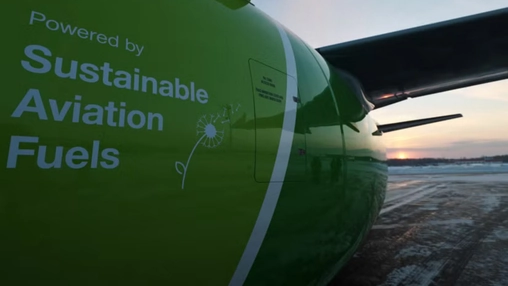
In Bon Wier, Texas, a town better known for its pine forests than jet engines, USA BioEnergy is launching one of America’s largest sustainable aviation fuel (SAF) projects. By 2028, the $2.8 billion plant will convert woody biomass, largely residual forest debris, into jet fuel. The process, involving gasification and Fischer-Tropsch synthesis, produces a “drop-in” fuel that fits existing aircraft engines and infrastructure.
This venture embodies a paradox common to decarbonisation efforts. The cleaner fuel is rooted in what might otherwise be seen as waste. USA BioEnergy claims an 80% reduction in greenhouse gas emissions compared with conventional jet fuel, sidestepping controversies over food crops and indirect land use. The site’s 1,600 acres promise 200 permanent jobs and a much-needed economic boost to rural East Texas. Federal, state, and local authorities have chipped in $150 million in tax incentives to help get the project off the ground.
“This is the kind of project that reshapes communities and redefines how we think about energy,” enthused a local official, keen to spotlight the potential for broader social and economic renewal.
The Texas plant is part of a wider U.S. push under the SAF Grand Challenge, aiming for 3 billion gallons of SAF annually by 2030. It also fits into global schemes such as ICAO’s CORSIA, which seeks to limit aviation emissions internationally.
Yet USA BioEnergy will not be alone in the race. Gevo’s $1.46 billion federal loan for a South Dakota SAF plant highlights fierce competition and the importance of government backing.
Bon Wier’s experiment captures a critical tension in the transition to cleaner skies. Turning timber waste into jet fuel avoids some environmental pitfalls but depends heavily on subsidies and stable policy. The question remains whether such rural projects can scale sufficiently to match the soaring demand for aviation fuel without unintended consequences for forestry or land management.
For now, Bon Wier bets its pine forests can help power the skies.
Latest News
4 Apr 2025
Fuel Rivals Unite: Can EPA Bring the Clarity Clean Energy Needs?27 Mar 2025
Fuel and Fields: U.S. Oil and Biofuels Align10 Mar 2025
KKR’s Bold Bet Puts Europe’s Biofuels Future in High Gear3 Mar 2025
BASF unites farm and fuel for cleaner skies
Related News

MARKET TRENDS
4 Apr 2025
Fuel Rivals Unite: Can EPA Bring the Clarity Clean Energy Needs?

REGULATORY
27 Mar 2025
Fuel and Fields: U.S. Oil and Biofuels Align

PARTNERSHIPS
10 Mar 2025
KKR’s Bold Bet Puts Europe’s Biofuels Future in High Gear
SUBSCRIBE FOR UPDATES
By submitting, you agree to receive email communications from the event organizers, including upcoming promotions and discounted tickets, news, and access to related events.